DeLand is the county seat of Volusia County, an inland college town built around Stetson University and a preserved historic downtown along Woodland Boulevard. The city sits between the St. Johns River on its western edge and the coast to the east, on ground that drains toward the river and was once dotted with natural springs. That river is the story of DeLand's worst water damage: when it rises, the low neighborhoods on the west side flood slowly and stay flooded for weeks. In town, the older housing of the Downtown and Garden District areas brings its own vulnerabilities, and the city's tornado history adds sudden roof damage to the list.
Water Damage Florida provides water damage restoration in DeLand around the clock, whether you are dealing with river water in a west-side home, storm rain through a torn roof, or a pipe that let go inside a 1920s house. Call (888) 435-4769 and we will walk you through the first steps while a crew is dispatched.
Emergency Water Damage Service for DeLand
DeLand's emergencies range from the sudden to the slow. Sudden means a tornado or severe thunderstorm tearing roofing away and letting rain into an attic and down through the ceilings, or a supply line bursting in a home near campus. Slow means the St. Johns River creeping up over days until it surrounds a house on the western edge of the city, or a heavy-rain event overwhelming a neighborhood's drainage and pushing water under doors. We handle both, and the first visit is the same: stop the source if it can be stopped, extract, and get drying underway.
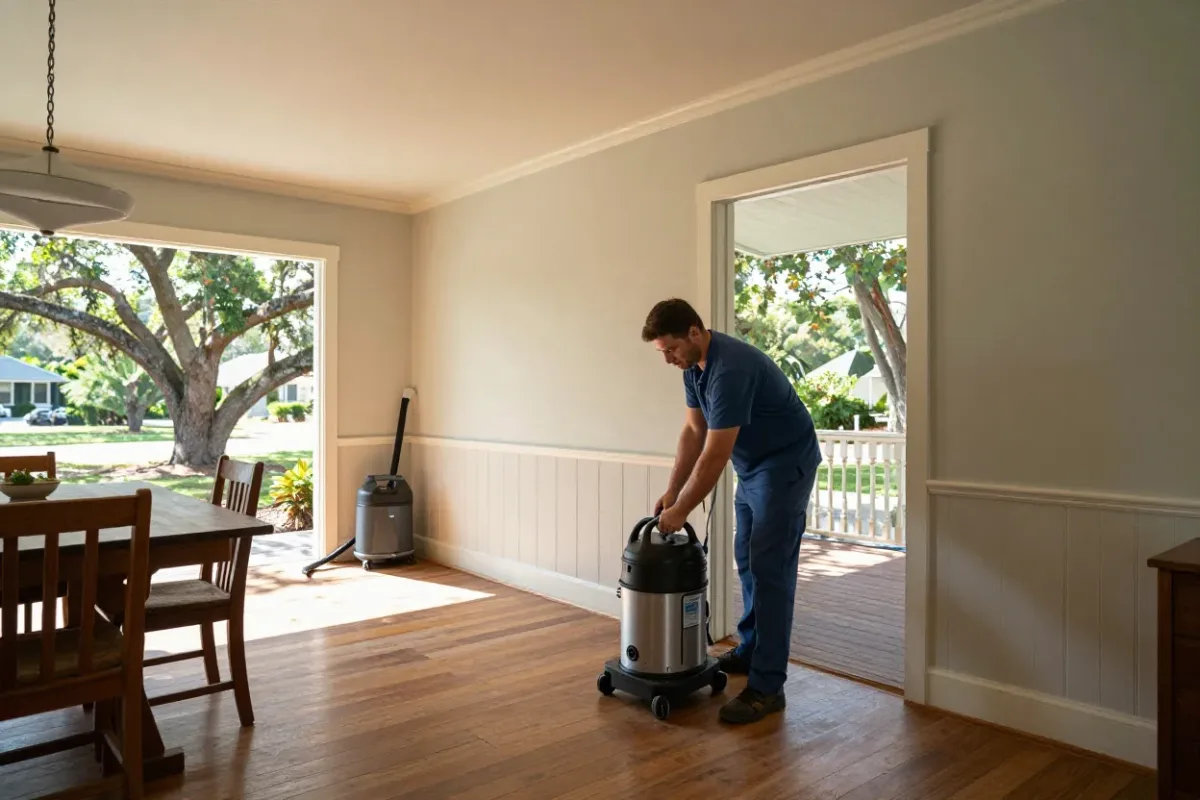
Our crews arrive with extraction equipment, pumps, air movers and dehumidifiers and begin on arrival. In older homes we work carefully around plaster, original wood floors and pier foundations. When the river is the source, we plan for the water to stay high and for the ground to remain saturated, and we treat every surface it touched as contaminated. Moisture readings and photographs are taken before equipment is placed so your insurance record reflects the real conditions. See our emergency water damage page for what to expect.
Restoring Historic Homes, Campus-Area Rentals and New Subdivisions
The Downtown DeLand Historic District and the Garden District hold early-twentieth-century homes, many wood-framed on piers with plaster walls and original flooring, alongside Mediterranean Revival commercial buildings. These structures can often be dried in place if we start early, and saving original plaster and wood is worth the extra care. Around Stetson University, older houses converted to rentals add multiple occupants and deferred maintenance to the picture. On the city's outskirts, newer subdivisions are block-and-stucco on slab with drywall and tile or plank floors, which dry well once the lower wall and flooring are opened.
In every case we dry the building closed with dehumidifiers and air movers, meter each material daily, and continue until readings reach the dry standard. Crawlspaces are dried from below when needed. Cleaning and antimicrobial treatment come first when the water was river water or otherwise contaminated, and repair waits until the structure is verified dry. Our water damage restoration service page explains our standards in more detail.
St. Johns River Flood Cleanup on DeLand's West Side
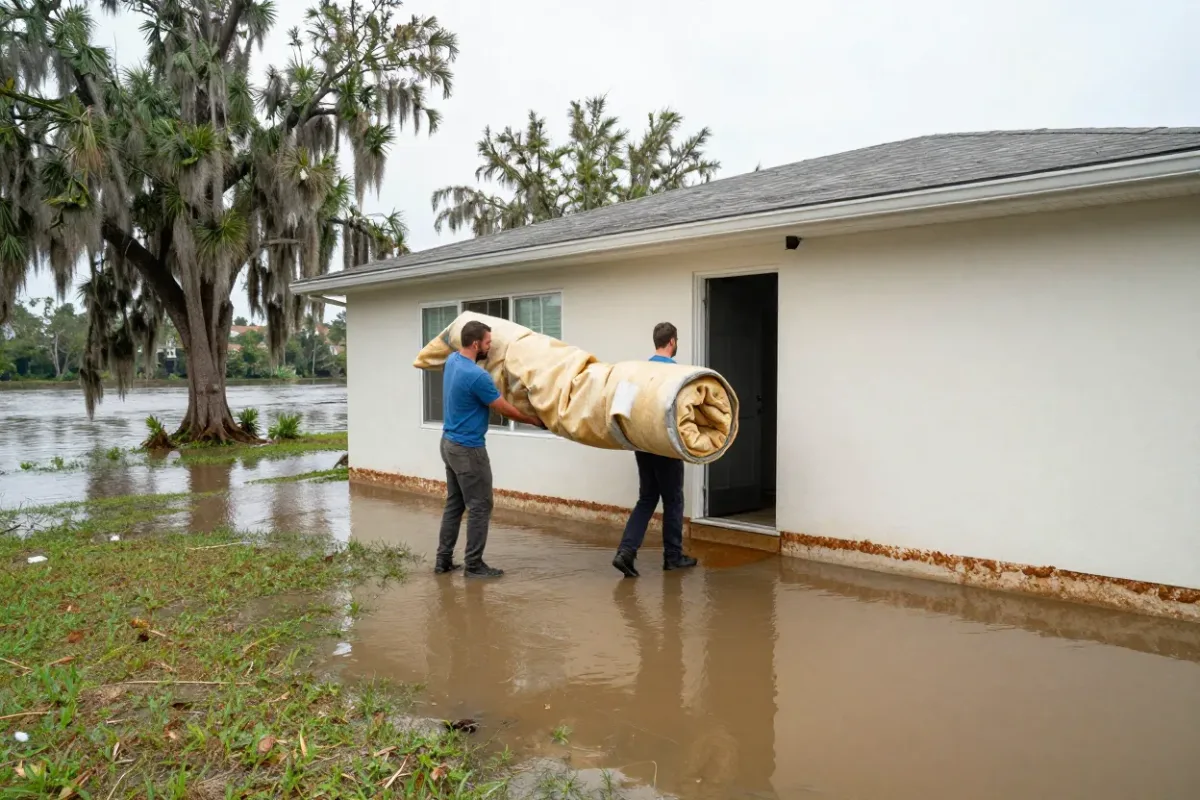
After Hurricane Ian in 2022, the St. Johns River exceeded flood stage as it passed DeLand, and riverfront neighborhoods on the city's western edge saw water rise around homes to levels worse than after Hurricane Irma in 2017. The river stayed high for weeks. River flooding is different from a flash flood: it comes slowly, it saturates the ground for a long time, and it leaves behind silt and whatever the river carried. Inland, heavy-rain events in 2023 and 2024 prompted residents to press the city on drainage as development expands, a sign that street and yard flooding is a growing concern away from the river as well.
River and street water are treated as contaminated. Flood cleanup removes the standing water and silt, then the porous materials the water soaked: carpet, pad, lower drywall, insulation, cabinet bases and, in pier homes, sections of subfloor. Hard surfaces are cleaned and disinfected, air filtration runs during the work, and drying follows once the contaminated material is out. Because the river recedes slowly, we keep checking crawlspaces and slab edges for returning moisture. Our flood restoration page and the hurricane water damage recovery guide cover the rest.
Repair After Water, Wind and River Damage
Repair in DeLand's historic areas means patching plaster rather than replacing walls, replacing individual floorboards, matching trim and casing profiles, and repainting to blend. After a tornado or roof failure it also means ceiling drywall or plaster, attic insulation and the interior finishes below. In newer subdivision homes the work is standard: drywall, baseboard, flooring, cabinet bases and paint. River-flooded homes often need subfloor, insulation and vapor barrier replaced beneath the floor as well.
The repair scope follows the moisture map and photographs from mitigation so that what we rebuild lines up with what was wet. That record goes to you and your adjuster. When roof damage is the cause, we coordinate timing so the interior repair does not begin until the roof is weather-tight.
Mold Removal in DeLand Homes
Older homes with crawlspaces, plaster and wood give mold plenty of places to establish itself after a leak, and a river that stays high for weeks makes the west side especially prone. We check crawlspaces and the underside of floors first, then the back of plaster after a roof leak, the drywall behind bathrooms in campus-area rentals, and the lower walls of any room that faced floodwater. In newer homes the usual suspects are the water heater closet, cabinet backs and the wall behind a lanai slider.
Our mold cleanup corrects the moisture source, contains the area with sheeting and negative air, removes and bags growing porous materials, HEPA-vacuums and cleans the remaining surfaces, and dries the cavity before closing it. We do not spray over growth. Our mold remediation page explains the approach, and if a ceiling was patched after a storm but never dried, read our note on hidden mold after water damage before repainting.
Common Sources of Water Damage in DeLand
The calls we take in DeLand reflect an inland city with a river on one side, a large stock of older homes, a growing edge of new subdivisions, and a history of tornadoes. The frequent sources:
- The St. Johns River rising around homes on the western edge of the city after tropical rain
- Tornado and severe thunderstorm roof damage letting rain into attics and ceilings
- Neighborhood drainage overwhelmed by heavy rain, pushing water under doors and into garages
- Original galvanized and cast-iron plumbing failing in Downtown and Garden District homes
- Bathroom and kitchen leaks in older houses converted to rentals near campus
- Water heaters and supply lines failing in newer subdivision homes on the outskirts
- Air conditioning condensate overflow during long stretches of continuous cooling
- Crawlspace moisture and seepage in pier-foundation homes after prolonged wet weather
Eight Steps From Wet to Restored
A river-flooded house on the west side and a leaking water heater near campus get the same disciplined sequence. Here is how a DeLand job runs.
- Inspection and classificationWe confirm the source, judge whether the water is clean or contaminated, and meter floors, walls, ceilings and crawlspaces to find the full wet footprint.
- Water extractionPumps and extraction equipment remove standing water and silt from floors, crawlspaces and garages.
- Removal of unsalvageable materialsSoaked pad, contaminated drywall, wet insulation, failed plaster and subfloor sections are cut out and bagged; sound original material is kept.
- Structural dryingDehumidifiers and air movers run in the closed building, including beneath raised floors, with readings logged daily until each material reaches its dry standard.
- Cleaning and treatmentSurfaces that contacted river or street water are cleaned and treated with an antimicrobial, and air scrubbers run throughout the work.
- DocumentationPhotographs, moisture logs and a written scope are compiled for you and your insurance carrier.
- Repair and finishPlaster, drywall, flooring, subfloor, trim, cabinetry, ceilings and paint are restored to match the home.
- Final checkA closing set of moisture readings and a walkthrough with you confirm the home is dry and the work complete.
DeLand Areas We Serve
Our crews cover all of DeLand, from the historic core along Woodland Boulevard and the streets around Stetson University to the river-side neighborhoods on the west and the newer subdivisions on the city's edges.
DeLand Neighborhoods
- Downtown DeLand Historic District
- Garden District
Nearby Communities
The communities of west Volusia, across the St. Johns in Seminole County, and on the coast share DeLand's storms, and our crews serve them too. Several have their own local pages:
What to Do Right Now
Before the crew arrives, these safe steps limit the damage and protect your claim.
- Stop the water if the source is insideClose the fixture valve or the main shutoff. In older homes the main is often at the meter near the street; locate it ahead of time.
- Keep out of water that may be liveIf outlets, cords or the electrical panel are in or near the water, do not go in. Cut breakers only from a dry panel you can reach without stepping in water.
- Treat river and street water as contaminatedDo not wade through it or attempt to clean it up by hand. Keep family and pets away until the crew has removed it.
- If the roof is open, contain what you canPlace buckets and move furniture out from under active drips, but do not climb onto a damaged roof or into a wet attic.
- Photograph everythingCapture the source, the water level and each affected room, including the exterior if the river or a storm was the cause.
- Keep the air conditioning runningCool, dry air slows microbial growth. Keep windows shut unless the roof damage makes that impossible.
- Call usReach Water Damage Florida at (888) 435-4769 and tell us whether the water came from the river, the roof or inside the house.
If the river is still rising, our first 24 hours after a flood guide covers what to do while the water is coming up.
DeLand Water Damage FAQs
The river surrounded our house for weeks after Ian. Is anything below the floor salvageable?
Sometimes the framing, rarely the insulation or subfloor. River water is contaminated and prolonged saturation ruins porous materials, so insulation, vapor barrier and soaked subfloor typically come out. Joists and piers that are structurally sound are cleaned, treated and dried from below. We decide with moisture readings and show you what we find.
A tornado took part of our roof and rain came in overnight. Where do you start?
With the ceilings and the attic. Wet attic insulation is removed so the ceiling can dry, ceiling drywall or plaster that has sagged comes down, and everything below is metered. Interior repair waits until the roof is weather-tight so the work is not undone by the next storm.
Can the plaster walls in our Garden District house be dried instead of replaced?
Often, yes. Sound plaster dries in place with the right equipment when we start early. We remove only sections that have separated from the lath or crumbled and patch them to match the surrounding surface.
We own a rental near Stetson. Can you work around tenants?
Yes. We coordinate access and scheduling with you and the tenants, keep equipment contained to the affected rooms where the drying plan allows, and document the work for both you and your insurer.
Our neighborhood is nowhere near the river but the street floods in heavy rain. Do you handle that?
We do. Street and yard runoff is treated as contaminated water, and we extract it, remove what it soaked, dry the home and document where it came in. Drainage improvements are outside our scope, but our record of the water's path is useful when you raise the issue with the city.
How long does drying take in an older DeLand home?
Longer than in a new slab home, because plaster, thick wood and crawlspaces hold moisture. A small clean-water leak may take several days; a river-flooded floor system takes considerably longer. We monitor daily and stop when the readings say the materials are dry.