New Smyrna Beach lives with water on three sides. The mainland downtown along Canal Street fronts the Indian River at the northern end of the Indian River Lagoon, the beachside sits on the barrier island just south of Ponce de Leon Inlet, and the whole city rests at sea level with the Atlantic to the east and Mosquito Lagoon and Canaveral National Seashore to the south. Ocean surge, tidal flooding on the Intracoastal and heavy-rain flooding all reach homes here, and the city's recent storm record shows how often they do. Water Damage Florida provides 24/7 water damage restoration in New Smyrna Beach, from a single soaked bathroom to a beachside house with tidal water through every room.
Because so much of the housing here is seasonal or vacation property, water damage is often discovered late, after a pipe has dripped for weeks behind a closed door or a roof leak has stained a ceiling in an empty condo. We work with owners who are out of state, with property managers and with year-round residents alike. Call (888) 435-4769 at any hour, tell us what you found, and we will get a crew moving toward the Coronado Beach or South Causeway bridges or the subdivisions to the west.
Emergency Water Damage Help on the Beachside and Mainland
The emergency calls we take from New Smyrna Beach fall into a few patterns. On the barrier island, older cottages and condominiums in North Beach and Central Beach take wind-driven rain through worn windows and roofing during tropical weather, and the lowest streets take tidal water when surge pushes through the inlet. Along the riverfront and on Bouchelle Island, water rises from the Indian River and the Intracoastal into garages and ground floors. Inland, in newer subdivisions such as Venetian Bay, the usual sources are ordinary: a failed water heater, a washing machine hose, a supply line under a sink that let go while the owners were away.
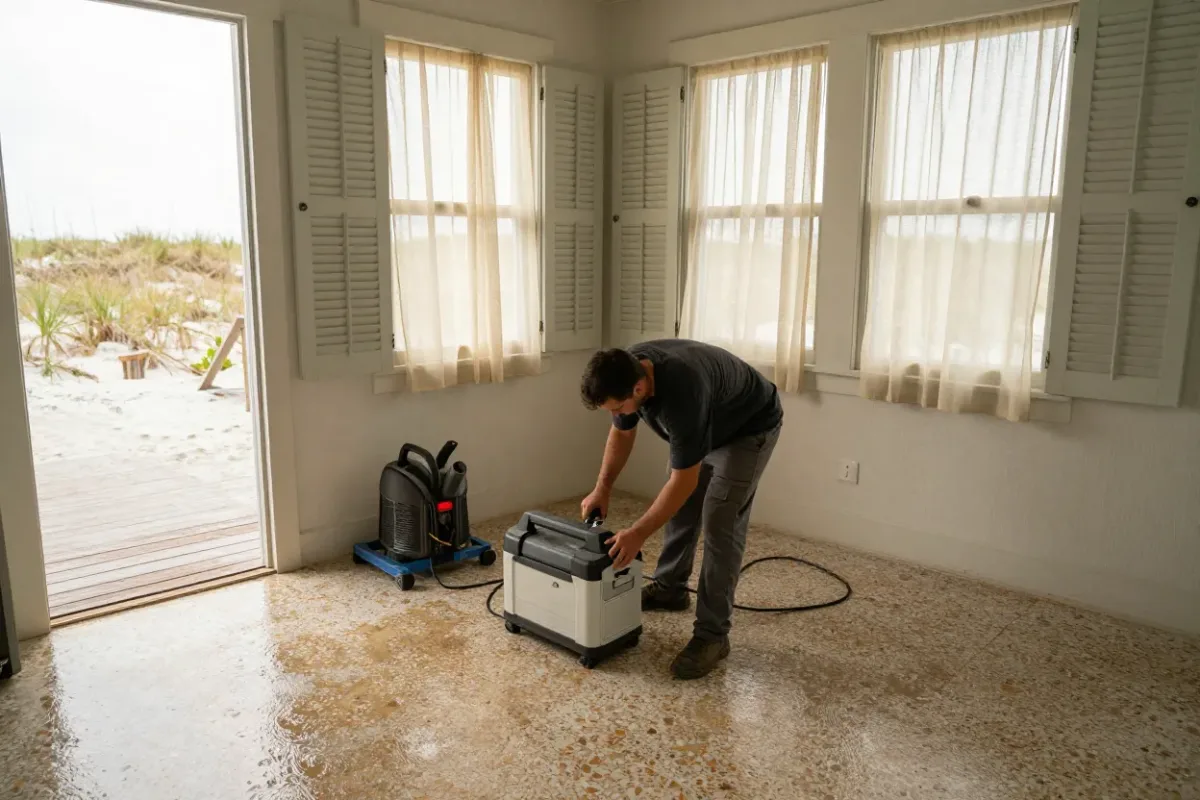
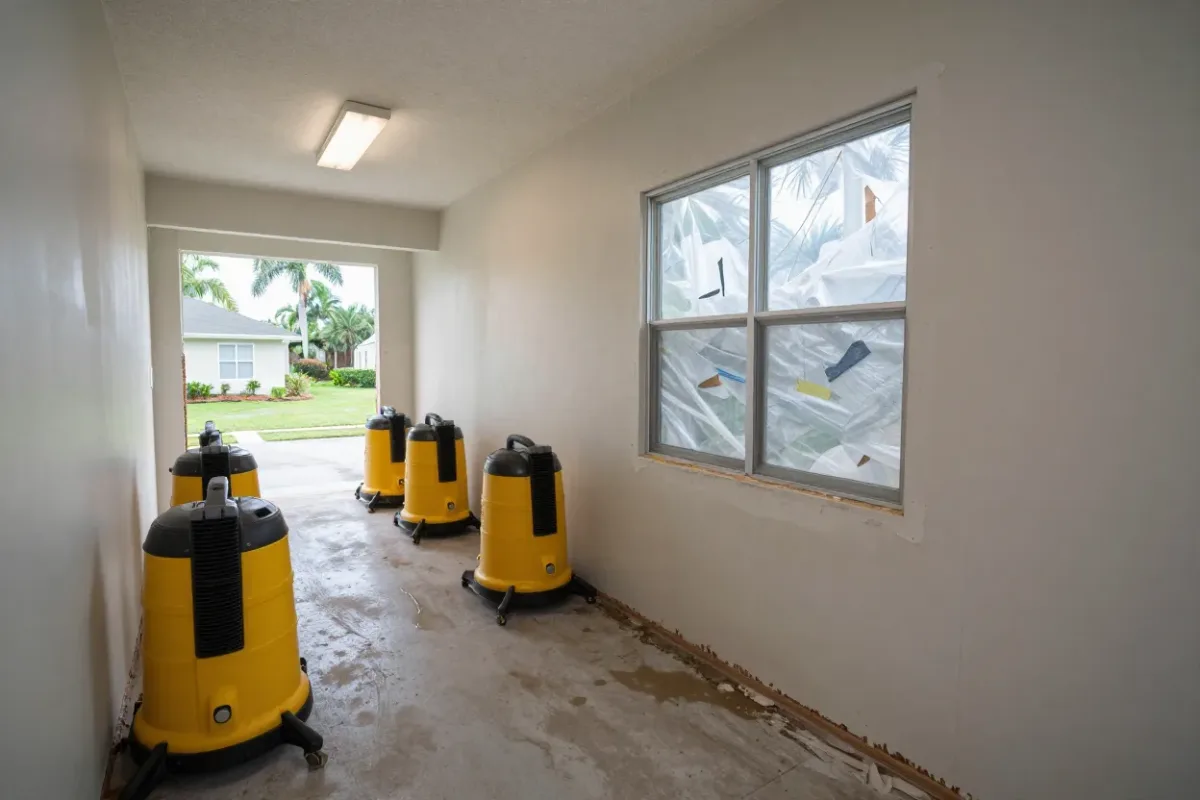
Whatever the source, the first visit is about stopping the loss from spreading. We extract standing water with portable and truck-mounted equipment, pull up wet carpet pad, open baseboards where drywall has wicked, and place air movers and dehumidifiers before we leave. We photograph everything and take moisture readings from the start so your insurer receives a record that begins on day one. For an overview of how we respond statewide, see our emergency water damage page.
Full Restoration for Cottages, Condos and Vacation Homes
Restoration means taking a wet building all the way back to a dry, finished one. In New Smyrna Beach that covers a wide range of construction: older beachside cottages with wood framing and original floors, mid-rise condominiums where one unit's leak reaches several others, and newer block-and-stucco homes on slabs in the western subdivisions. After extraction we map wet materials with moisture meters, decide what can be dried in place, and remove what cannot, then run drying equipment until the readings say the structure is dry rather than until it looks dry.
The Atlantic humidity that hangs over the beachside makes drying slower than inland owners expect. We keep the building closed, size dehumidifiers to the space, and log readings on each visit until every monitored material returns to its dry standard. Only then does the rebuild begin: drywall, trim, cabinets, flooring and paint, matched to the rest of the home. For seasonal properties we can coordinate access with your manager and send progress photos so you are not guessing from a distance.
Flood Cleanup After Surge, Tides and Tropical Rain
New Smyrna Beach has been flooded from more than one direction in recent years. Hurricane Ian in 2022 flooded homes affecting more than a thousand residents, with regional rainfall that was extreme, and Hurricane Nicole followed only weeks later with more surge and erosion. Hurricane Milton in 2024 knocked out power to the vast majority of customers and brought further flooding. Earlier, Hurricane Charley in 2004 caused extensive damage to the beachside, and Hurricane Matthew in 2016 produced hurricane-force gusts and severe erosion along the county coast. Each of those events left homes with a mix of surge water, rain intrusion and long power outages, which is the combination that turns wet drywall into a mold problem.
Flood water from the ocean, the Indian River or the street is contaminated and is handled differently from a clean pipe leak. Porous materials it touched, including drywall, insulation, carpet and particleboard cabinetry, are removed rather than dried, and hard surfaces are cleaned and disinfected before drying equipment runs. If you are dealing with this now, keep out of the water and start with our first 24 hours after a flood guide, then call us. Our flood restoration page explains the full sequence.
Water Damage Repair in New Smyrna Beach
When drying is verified, repair puts the home back together. Typical repair work here includes replacing the lower course of drywall and baseboards, rebuilding cabinet bases, replacing laminate or engineered flooring that swelled, repainting, and repairing ceilings under roof leaks. In the older cottages of the beachside and the Historic Westside we take care with original wood floors and plaster, which are often worth saving when drying starts early enough. In the newer western subdivisions, the work is more often standard drywall, tile transitions and trim.
We build the repair scope from the moisture logs and photographs gathered during mitigation, so the line between storm damage and pre-existing wear is clear to your adjuster. In condominiums we plan around association rules on work hours and common-area protection, and where a loss spans multiple units we document each one separately so every owner has a complete record.
Mold Removal After Water Intrusion
Salt air, warm temperatures and the sheer number of homes that sit empty for months make mold a routine follow-on to water damage in New Smyrna Beach. A slow leak under a vacation home's kitchen sink, a roof drip into a closet in an unoccupied condo, or a garage that took an inch of tidal water and was never dried can all produce visible growth on drywall, cabinet backs and stored belongings long before anyone notices.
Our mold work starts with finding and fixing the moisture source, because removal without that step does not last. We contain the affected area, run HEPA air filtration, remove and bag contaminated porous materials, clean the remaining surfaces, and dry the space completely before any rebuild. Read about our statewide approach on the mold remediation page, and if a wall in your home was ever wet, see where hidden mold forms after water damage before you repaint it.
What Causes Water Damage Here
The sources of water damage in New Smyrna Beach reflect its setting between the ocean and the lagoon, its older beachside housing and its large seasonal population. The calls we take most often involve:
- Storm surge and Intracoastal tidal flooding reaching beachside and riverfront homes
- Wind-driven rain through aging windows, doors and roofing on barrier-island cottages and condos
- Heavy tropical rainfall overwhelming yards and drainage in low, flat neighborhoods
- Undiscovered leaks in seasonal and vacation homes that sit closed for months
- Water heater, washing machine and supply line failures in newer inland subdivisions
- Roof damage from falling oaks and limbs during high winds
- Air conditioning condensate overflows in homes left closed in summer
- Erosion and beach loss exposing seawalls and foundations to wave action
How We Restore a Water-Damaged Home
Every job in New Smyrna Beach follows a fixed sequence of eight steps. The order exists so that nothing is closed up or rebuilt while it is still wet.
- Inspection and moisture surveyWe locate the source, judge whether the water is clean or contaminated, and trace how far it traveled with meters and thermal imaging, including under floors and behind cabinets in a home that may have been wet for weeks.
- ExtractionStanding water, whether tidal, rain or plumbing, is pumped and vacuumed out of living spaces, garages and ground-floor units.
- Removal of what cannot be savedWet drywall, insulation, carpet pad and swollen cabinetry are cut out and bagged, with extra care taken around original wood and plaster in older cottages.
- Drying and dehumidificationAir movers and dehumidifiers run in a closed building, with readings logged each visit until wood, drywall and slab return to their dry standard.
- Cleaning and treatmentSurfaces reached by surge or contaminated water are cleaned and disinfected, and air filtration runs while the work continues.
- DocumentationPhotographs, moisture logs and a written scope are assembled for you, your property manager if you have one, and your insurance carrier.
- RebuildDrywall, trim, cabinets, flooring and paint are rebuilt to match the untouched parts of the house or condo.
- Final verificationA closing moisture check and walkthrough confirm the space is dry, finished and ready to occupy or rent again.
New Smyrna Beach Areas We Serve
We respond across the whole city, on both sides of the river. Crews know the difference between an older cottage in North Beach, a riverfront home on Bouchelle Island, a house near the Canal Street downtown and a newer slab home in Venetian Bay, and they bring equipment suited to each.
Neighborhoods in New Smyrna Beach
- Canal Street downtown
- Historic Westside
- North Beach
- Central Beach
- Venetian Bay
- Bouchelle Island
- Turnbull Shores
- Sugar Mill
- Islesboro
- Buena Vista Shores
- Fairway
- Glencoe
Nearby Communities
Our crews also cover the communities up and down the Volusia coast and inland toward the St. Johns. Several of these have their own service pages:
What to Do Before the Crew Arrives
A few careful actions in the first hour limit the damage. These are safe for most homeowners and for a property manager checking on a seasonal home.
- Shut off the sourceClose the fixture valve or the main water shutoff if the leak is plumbing. If it is storm water, there is nothing to shut off; focus on the steps below.
- Keep away from water near electricalDo not walk into a flooded garage or room if outlets, appliances or the panel could be in contact with water. Switch off power to the area only if the panel is dry and you can reach it without stepping in water.
- Assume surge and tidal water is contaminatedKeep children and pets out and avoid touching it. Leave the cleanup of that water to us.
- Raise what you canLift rugs, get furniture legs onto blocks or foil, and move electronics and paper off the floor.
- Document before touchingPhotograph the source, the waterline and each affected room, including anything you plan to move.
- Run the air conditioning if you have powerCool, dry air slows mold. Do not open windows to humid beach air.
- Call usReach Water Damage Florida at (888) 435-4769 and tell us the source, how long it has been wet and whether the home is occupied.
If the loss followed a named storm, our hurricane water damage recovery guide covers the days that follow.
Questions From New Smyrna Beach Homeowners
I own a vacation home in New Smyrna Beach and live elsewhere. Can you handle the job without me there?
Yes. We regularly work with out-of-town owners and their property managers. We coordinate access, send photographs and moisture readings as the job progresses, and prepare the documentation your insurer needs, so you can make decisions from wherever you are.
Is water from the Indian River or the ocean handled differently than a burst pipe?
It is. Surge, tidal and street water is contaminated and often salty, so porous materials it reached are removed and hard surfaces are disinfected rather than simply dried. A clean plumbing leak caught early allows far more of the home to be saved in place.
Do you work on beachside condominiums?
We do. We coordinate with the association and management, trace water through neighboring units when a leak travels, protect hallways and elevators, and document each unit separately.
How long does drying take on the beachside?
It depends on the materials and how long they were wet, but the humid air near the ocean usually adds time compared with an inland home. We run equipment in a closed building and stop only when moisture readings, not appearance, confirm the structure is dry.
Can you help with a home that was flooded during Ian or Milton and never fully dried?
Yes. Homes that were wet during those storms and closed up afterward often have moisture and growth behind walls. We inspect, open what needs to be opened, remediate any mold, and dry the structure properly before repairs.
Do you serve Edgewater, Ponce Inlet and the rest of southeast Volusia?
We serve the whole area, including Edgewater, Oak Hill, Bethune Beach, Ponce Inlet and the Daytona Beach communities to the north, as well as the rest of Florida through our statewide service areas.