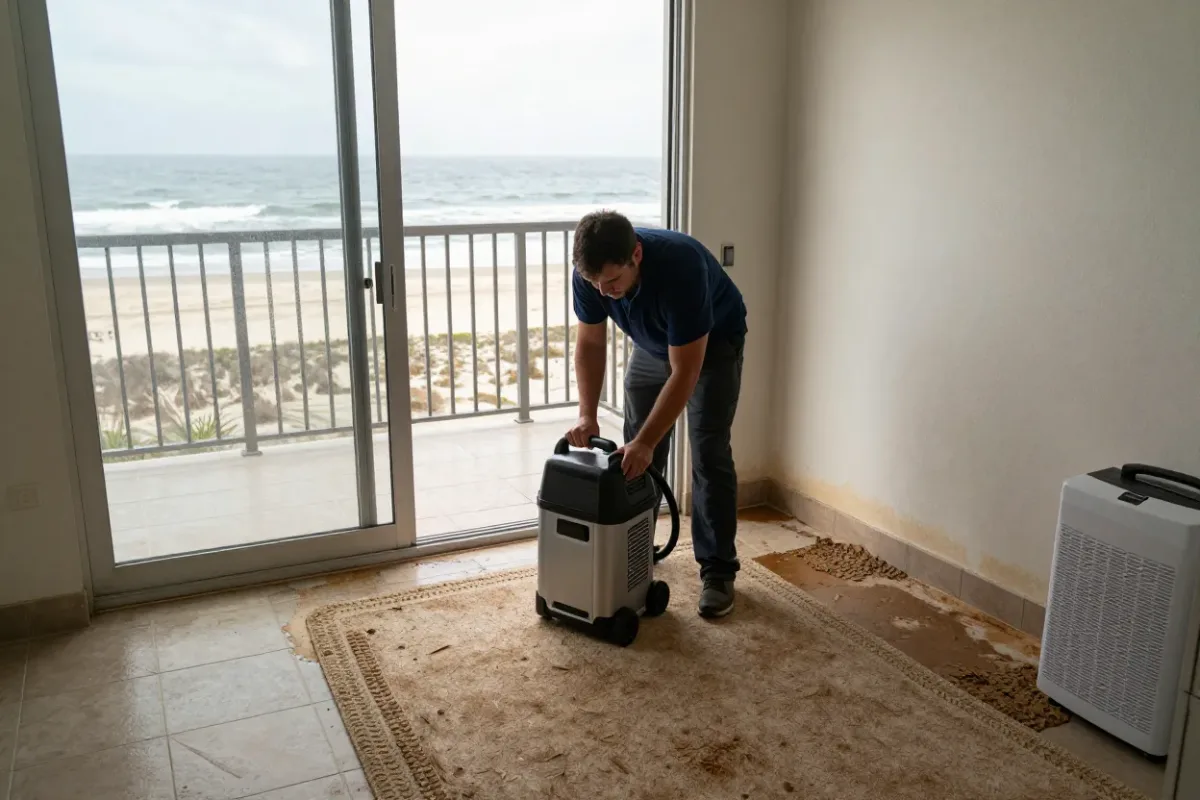
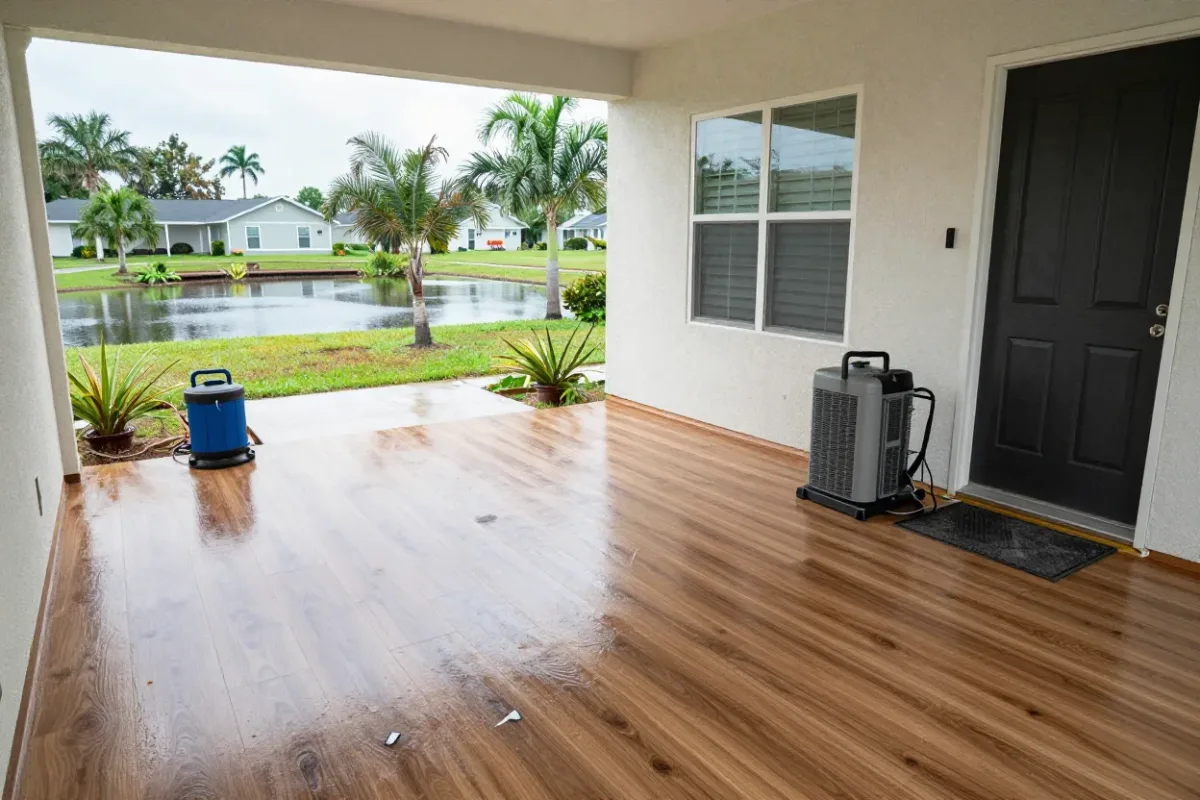
Daytona Beach is really two cities joined by bridges. On the beachside, a low barrier island carries the famous hard-packed beach, a strip of hotels and condos, the Boardwalk District and the Seabreeze Historic District, all exposed to ocean surge and erosion. On the mainland, the older core around Beach Street, Midtown and Main Street gives way westward to newer subdivisions and golf communities like LPGA International, Pelican Bay and Grand Preserve, and the whole mainland drains toward the Halifax River and the Tomoka River. The Halifax, a tidal lagoon on the Intracoastal Waterway, is the seam between the two halves. Water Damage Florida provides 24/7 water damage restoration on both sides of the river.
That split geography means our Daytona Beach crews carry two mindsets at once. Beachside, the concern is salt water, sand and surge in ground-floor units and lobbies; mainland, it is rain that has nowhere to go, tidal backup along the river, and the plumbing failures common to any large stock of homes, apartments and student rentals. Call (888) 435-4769 at any hour, tell us which side of the river you are on, and we will get a crew moving.
Emergency Water Damage Help on Both Sides of the Halifax
The emergency calls from Daytona Beach sort themselves by geography. From the beachside they are about surge and wind-driven rain in oceanfront condos and hotels, a slider that failed in a squall, or a supply line in one unit sending water through the floors below. From the mainland they are about a water heater in a Pelican Bay garage, a roof leak over a Midtown bungalow, a washing machine hose in a student rental, or a ground floor along the Halifax that took river water when the tide came up. Both kinds need the same first hour: stop the source, extract the standing water, and get drying equipment running before the walls absorb it.
We arrive with pumps for garages, lobbies and ground floors, portable and truck-mounted extractors for interior rooms, and enough air movers and dehumidifiers to begin drying on the first visit. In condo and hotel buildings we trace water through every affected floor, not just the unit that called. Photographs and moisture readings begin on arrival. Our emergency water damage page walks through the first hours in more detail.
Restoration for Condos, Hotels and Mainland Homes
Restoration takes a property from wet to finished, and in Daytona Beach the properties vary widely: mid-rise and high-rise condos and hotels on the beachside, older frame and block homes in Midtown and the Seabreeze Historic District, commercial buildings along Beach Street, and slab-on-grade subdivision homes in Indigo, Georgetowne, Tuscany Woods and the golf communities. In concrete buildings the structure survives and the losses are drywall, flooring, cabinetry and the insulation behind finished walls. In older homes the question is whether wood floors and plaster can be dried in place, which depends on how quickly we arrive.
We map wet materials with moisture meters and thermal imaging before removing anything, then dry with the building closed and dehumidifiers sized to the space. Humid air off the ocean and the river slows evaporation, so open windows work against you here. Readings are logged daily, and drying is finished only when every material reaches its dry standard.
Surge, Erosion and Rain Flood Cleanup
Daytona Beach sees both coastal and rain-driven flooding. Hurricane Matthew in 2016 brought Volusia County's strongest gusts to the city and severe coastal erosion, and a disaster recovery center opened here afterward. Hurricane Ian and Hurricane Nicole in 2022 together produced historic rainfall across the region, major storm-surge flooding and severe beach erosion that left dozens of coastal structures in the county collapsed or endangered. Hurricane Irma in 2017 and Hurricane Charley in 2004 are also on the city's storm record, along with Hurricane Donna in 1960 and a rare rogue wave in 1992 that damaged property along the beach.
Ocean, river and street water is treated as contaminated, and beachside surge brings sand and salt with it. Flood cleanup means pumping out what remains, removing sand and silt, taking out saturated porous materials rather than drying them, rinsing salt from hard surfaces, disinfecting, and running air filtration while the building dries. Ground-floor condo units, hotel lobbies, parking-level storage and mainland homes along the Halifax get the closest attention because that is where the water settles.
Repair After the Drying Is Verified
Repair starts when moisture readings confirm the structure is dry. On the beachside that typically means new drywall and baseboards in ground-floor units, replacement of sliders and doors corroded by salt water, and restoration of lobbies and common areas in coordination with the association or hotel management. On the mainland it ranges from matching plaster and trim in a Seabreeze or Midtown home to replacing cut drywall, laminate and cabinets in a subdivision house.
We build the repair scope from the moisture logs and photographs gathered during mitigation, so your adjuster sees a clear record of what the water did and where. In multi-unit buildings we document each unit and the common areas separately so owners and the association each have what they need, and we work within building rules on hours and elevator use.
Mold Removal in Daytona Beach
Mold in Daytona Beach follows moisture that lingered: the lowest course of drywall in a beachside unit that took surge in 2022 and was patched quickly, the wall behind a shower in a student rental, an air handler closet in a Tuscany Woods home, or a ground floor along the Halifax that flooded and was dried with a box fan. In warm months growth can begin within days of wetting.
Our mold remediation corrects the moisture source first, contains the area with sheeting and negative air, removes and bags contaminated porous materials, HEPA-vacuums and cleans what remains, and dries the space fully before rebuilding. Spraying over growth is not remediation and we do not do it. If a wall was ever wet and simply dried on its own, read about where hidden mold forms after water damage before you repaint.
What Sends Water Into Daytona Beach Properties
A barrier-island beachside, a tidal river and a rain-soaked mainland produce a wide mix of losses. The causes we deal with most often include:
- Ocean storm surge and wave action into beachside ground floors, lobbies and parking levels
- Halifax River tidal flooding into mainland streets and buildings along the waterfront
- Heavy tropical rainfall overwhelming drainage on the flat mainland and toward the Tomoka River
- Plumbing failures in condo and hotel towers that send water through the floors below
- Water heater, supply line and washing machine hose failures in homes and rentals
- Wind-driven rain through sliders, windows and roofs during named storms
- Clogged AC condensate lines and rusted drain pans overflowing into closets and ceilings during the long cooling season
- Roof and flashing leaks on older homes in the mainland core
Our Restoration Process in Daytona Beach
Whether the job is a leaking unit on the tenth floor or a flooded ranch in Georgetowne, the sequence is the same. The verification steps are what keep a repaired wall dry.
- Inspection and moisture mappingWe locate the source, classify the water, and trace how far it spread with meters and thermal imaging, including units and floors below the visible damage.
- ExtractionPumps clear lobbies, garages and ground floors; extractors pull water from carpet, pad and hard floors inside.
- Removing sand and ruined materialsSaturated drywall, wet insulation, carpet pad and swollen cabinet bases are removed and bagged, and beachside sand and silt are cleared before drying.
- Drying and dehumidificationAir movers and dehumidifiers run inside the closed building, with readings logged daily until each material meets its dry standard.
- Cleaning and treatmentSurfaces touched by surge, river or contaminated water are rinsed, cleaned and treated, with air filtration running throughout.
- DocumentationPhotos, moisture logs and a written scope are compiled for you, your carrier and, in a condo, the association.
- RepairDrywall or plaster, trim, flooring, cabinets, doors and paint are restored to match the property.
- Final verificationA final round of readings and a walkthrough confirm the space is dry and ready to use.
Daytona Beach Areas We Serve
We cover the whole city on both sides of the Halifax River: the beachside from the Boardwalk District and Main Street to the Seabreeze Historic District, the mainland core around Beach Street and Midtown, and the subdivisions and golf communities stretching west toward the interstate.
Daytona Beach Neighborhoods
- Midtown
- Seabreeze Historic District
- Beach Street (Downtown)
- Main Street
- Boardwalk District
- LPGA International
- Pelican Bay
- Indigo
- Georgetowne
- Tuscany Woods
- Grand Preserve
Nearby Communities
Our crews also serve the neighboring cities along the Halifax and the rest of Volusia and Flagler counties. Several of these have their own pages:
First Steps After You Find Water
These actions are safe for most residents, condo owners and managers and will limit the damage before our crew arrives.
- Stop the sourceClose the fixture valve or the main. In a condo or hotel, notify management or the building engineer so the riser can be isolated.
- Do not enter water that may be energizedStay out of a flooded garage, lobby or ground floor if outlets, cords, equipment or the panel could be in contact with water. Only kill power at a panel that is dry and reachable without wading.
- Treat surge, river and street water as contaminatedKeep people and pets out, avoid skin contact, and do not run household fans over it.
- Raise belongingsMove rugs, electronics and furniture off wet floors; put foil or blocks under anything that must stay.
- Photograph before cleaningCapture the source, the water line and every affected room or unit before anything is moved or discarded.
- Keep the space cooled and closedRun the air conditioning and keep sliders and windows shut so humid air does not slow drying.
- Call with the detailsReach (888) 435-4769 and tell us the source, how long it has been wet, and whether other units or floors are affected.
If a storm is the cause, our hurricane water damage recovery guide and the first 24 hours after a flood checklist take it from here.
Daytona Beach Water Damage FAQs
Surge came into the ground floor of our beachside condo building. Where do you start?
With the association or management, then the affected units and common areas as one project. Sand and salt are removed, wet materials come out, block and slab are rinsed and dried, and each unit is documented separately so every owner has a record for their own claim.
Our mainland home is nowhere near the ocean. Are we really at risk?
The mainland drains toward the Halifax and Tomoka rivers, and the 2022 storms showed how much rain the region can take at once. Tidal backup along the river and plumbing failures inside the house are the more common mainland losses.
Do you work with hotels and rental properties during the busy season?
Yes. We schedule around guests where we can, contain the work area, and move quickly on drying so rooms and common areas can reopen as soon as the readings allow.
Can wood floors and plaster in a Seabreeze or Midtown home be saved after a leak?
Often, if the water was clean and drying starts early. Wood floors can be dried in place with specialty equipment and plaster can usually be dried rather than replaced. Materials soaked by surge or long-wet are evaluated case by case.
How long does drying take here?
A clean-water loss typically dries in a few days once the space is closed and equipment is running. Ground floors that took surge run longer because the tear-out has to happen before drying can start. We commit to a schedule after the inspection and revise it as the readings come in.
Do you also cover Daytona Beach Shores, Holly Hill and South Daytona?
We do. Our crews serve the whole Halifax River corridor, Port Orange and Ormond Beach, and the rest of Florida through our statewide service areas.