Ormond Beach sits immediately north of Daytona Beach, straddling the Halifax River lagoon with a beachside strip on the Atlantic barrier island and a much larger mainland section drained by the Tomoka River, which winds through the city's western neighborhoods before emptying into the Halifax through Tomoka State Park and the Tomoka Marsh Aquatic Preserve. The city's official elevation is only a few feet above sea level. That gives it three ways to get wet: ocean surge on the beachside, tidal flooding along the Halifax, and river flooding from the Tomoka when heavy rain has nowhere to go. Water Damage Florida handles water damage restoration for the beachside, the riverfront and the mainland alike, 24 hours a day.
Ormond Beach is mostly residential, a suburban and retirement city with riverfront neighborhoods, the historic Granada Boulevard business district, and newer subdivisions and golf communities spreading west, among them Breakaway Trails, Hunters Ridge, The Trails and Ormond Lakes. Our crews carry gear for all of them, from a surge-hit beachside home to a rain-flooded garage in Deer Creek. Call (888) 435-4769 at any hour and we will start a crew toward you.
Emergency Response in Ormond Beach
The emergency calls from Ormond Beach have a seasonal rhythm. Most of the year they are plumbing: a water heater in a Pine Trails garage, a supply line in a Central Park townhouse, a washing machine hose in an Ormond Terrace ranch, an air handler drain pan overflowing in a closet. During tropical weather they shift outdoors: the Tomoka River spilling into the low neighborhoods along its banks, the Halifax pushing tidal water into riverfront yards and garages, and surge and wind-driven rain hitting the beachside strip. Every one of them needs the same first hour: stop the source if there is one, extract the standing water, and get drying equipment running.
We arrive with pumps for garages and flooded ground floors, portable and truck-mounted extractors for interior rooms, and air movers and dehumidifiers to begin drying on the first visit. Moisture readings and photographs begin on arrival. The details we ask for on the phone are listed on our emergency water damage page.
Restoration for Riverfront, Beachside and Golf Community Homes
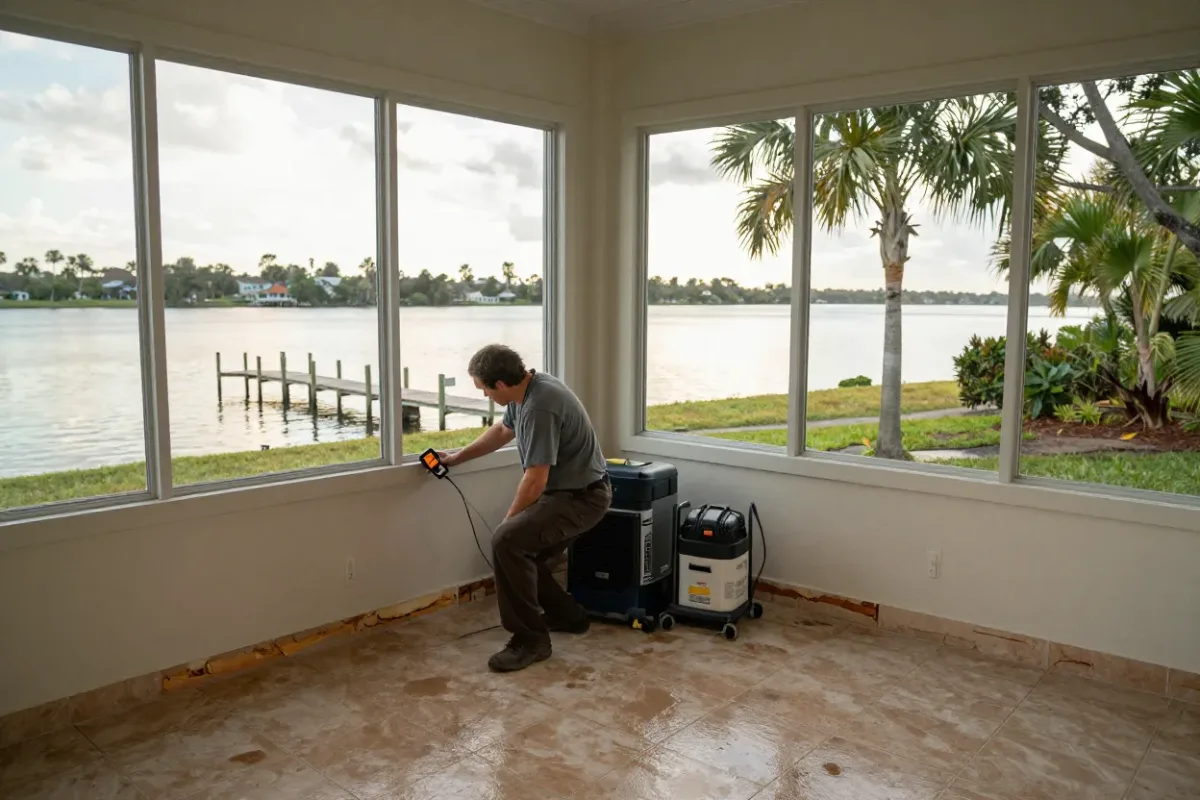
Restoration takes a house from wet to finished, and in Ormond Beach the houses fall into a few recognizable types: older riverfront homes along the Halifax, beachside homes and condos on the barrier island, and slab-on-grade subdivision houses in the golf and gated communities to the west. In nearly all of them the vulnerable materials are the ones nearest the floor: drywall and baseboards, cabinet toe-kicks, carpet pad, laminate and engineered wood, and the insulation inside exterior walls. We map every wet material with moisture meters and thermal imaging before removing anything, and dry in place whatever the readings say can be saved.
Drying is done with the house closed and dehumidifiers sized to the space, because humid air off the river and the ocean slows evaporation. We take readings every day, and the equipment comes out only when every material has hit its target. Cleaning, treatment where the water category calls for it, and rebuild follow in that order.
Tomoka River, Halifax and Surge Flood Cleanup
Ormond Beach is exposed to storm surge, tidal flooding and river flooding from heavy rain, and recent storms have delivered all three. During Hurricane Matthew in 2016, surge and breaking waves stripped the protective dune along A1A just north of the city at Ormond-by-the-Sea and damaged the road. Hurricane Ian in 2022 caused extensive damage to the city's Andy Romano Beachfront Park and required inspection of the Granada Bridge, and the back-to-back Ian and Nicole storms produced severe beach erosion and surge flooding across Volusia County. Hurricane Irma in 2017 and Hurricane Charley in 2004 are on the city's record as well.
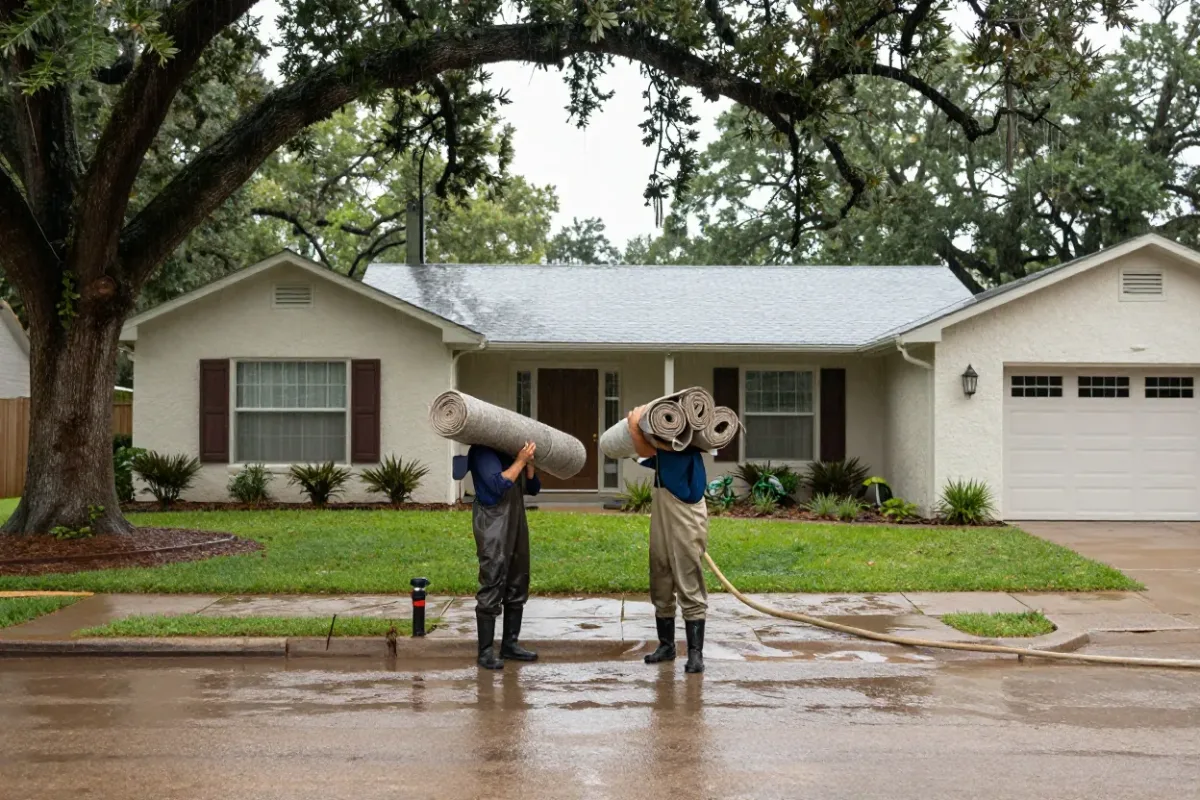
River, tidal and surge water is treated as contaminated. Flood cleanup means pumping out what remains, removing saturated porous materials rather than drying them, cleaning and disinfecting the slab and hard surfaces, rinsing salt where surge was involved, and running air filtration while the house dries. Along the Tomoka the water tends to be dark, silty and slow to recede, so garages and low rooms in the river neighborhoods get the closest look.
Repair That Starts When the Numbers Say Dry
Repair begins after moisture readings confirm the structure is dry. In Ormond Beach that usually means replacing the lower drywall and baseboards, reinstalling or replacing flooring, rehanging or replacing base cabinets and repainting. Beachside it may add sliders, exterior doors and trim corroded by salt water; along the river it often includes garage finishes and utility closets that flooded first. In the Granada Boulevard district we plan around business hours so a flooded storefront can reopen as soon as drying allows.
We build the repair scope from the moisture logs and photographs gathered during mitigation, so your adjuster sees a clear record of what the water did. For seasonal residents we handle approvals remotely, send progress photos and close with a video walkthrough.
Mold Removal in Ormond Beach Homes
Mold in Ormond Beach follows water that was allowed to sit: the garage wall of a Tomoka Oaks home that took river water and was never opened up, the lowest drywall in a riverfront sunroom after a high tide, the wall behind a shower in a Northbrook ranch, or an air handler closet in a Village of Pine Run home. Once summer humidity sets in, a wet wall cavity can show growth in a matter of days.
The mold remediation work starts by fixing whatever is still letting moisture in, then the room is sealed off under negative air, the contaminated porous materials are bagged out, remaining surfaces are HEPA-vacuumed and cleaned, and the space is dried and verified before it is closed back up. We never spray over growth and leave. A wall that got wet once and was left to dry by itself deserves a look at where hidden mold forms after water damage before the next coat of paint.
Typical Causes of Water Damage Here
A city with an ocean beach, a tidal lagoon and a river running through its mainland collects water damage from several directions. The causes we handle most often in Ormond Beach include:
- Tomoka River flooding into the low mainland neighborhoods along its banks after heavy rain
- Halifax River tidal water backing into riverfront yards, garages and ground floors
- Ocean surge and wind-driven rain into beachside homes and condos during tropical systems
- Water heater, supply line and appliance hose failures in single-family homes
- Leaks that run unnoticed in homes left empty by seasonal residents
- Attic and closet air handlers whose condensate drains back up and spill over the pan during peak cooling months
- Roof and flashing damage from hurricane winds letting rain into attics and ceilings
- Slab and under-sink plumbing leaks in older mainland homes
How We Handle Each Job
From a hose failure in Oak Forest to a river flood along the Tomoka, the order of work is the same. Each stage is checked before the next begins, which is how the finished room stays dry.
- Inspection and moisture mappingWe find the source, classify the water, and trace how far it spread with meters and thermal imaging, including garages, closets and the base of exterior walls.
- ExtractionPumps clear garages and flooded ground floors; extractors remove water from carpet, pad and hard floors inside.
- Removal of ruined materialsWet drywall, soaked insulation, ruined pad and swollen cabinet bottoms come out and are bagged, exposing the slab and studs to the drying air.
- Drying and dehumidificationWith the house sealed, air movers and dehumidifiers run around the clock while we chart moisture in each material until it reaches target.
- Cleaning and treatmentSurfaces touched by river, tidal, surge or contaminated water are cleaned and treated, with a salt rinse where needed and air filtration running throughout.
- DocumentationEvery photo, reading and line of scope is gathered into one record for you and your adjuster.
- RepairNew drywall, trim, floors, cabinets, doors and paint go in to match what was there before.
- Final moisture checkWe finish with a last set of readings and a walkthrough with you so nothing is left damp behind a new wall.
Ormond Beach Neighborhoods We Serve
We cover the whole city, from the beachside strip and the riverfront neighborhoods along the Halifax to the Granada Boulevard historic district and the subdivisions and golf communities that spread west along the Tomoka.
Ormond Beach Neighborhoods
- Breakaway Trails
- The Trails
- Hunters Ridge
- Pine Trails
- Ormond Lakes
- Oak Forest
- Tomoka Oaks
- Village of Pine Run
- Deer Creek
- Northbrook
- Central Park
- Ormond Terrace
- Granada Boulevard historic district
Nearby Communities
Our crews also serve the beach communities to the north, the cities along the Halifax to the south and the rest of Volusia and Flagler counties. Several nearby cities have their own pages:
Six Things to Do Right Away
Take these steps in order if you can; they protect people first and the building second, and they buy time until we arrive.
- Shut off the water if it is plumbingClose the valve at the fixture or appliance, or the main shutoff at the house. If you are away for the season, ask a neighbor or property manager to do it.
- Keep away from water near electricityDo not enter a flooded garage, sunroom or ground floor if outlets, cords, appliances or the panel could be in contact with water. Breakers should be switched off only from a panel that is dry and reachable on dry ground.
- Treat river, tidal and surge water as contaminatedKeep children and pets out, avoid skin contact, and do not run household fans over it.
- Move belongings up and photograph everythingLift rugs, electronics and furniture off wet floors, then capture the source, the water line and each affected room before anything is discarded.
- Keep the house closed and cooledRun the air conditioning and keep windows and sliders shut so humid air off the river does not slow drying.
- Call with the detailsReach (888) 435-4769 and tell us the source, how long it has been wet, and whether you are beachside, riverfront or inland.
When a storm is the cause, our hurricane water damage recovery guide and the first 24 hours after a flood checklist pick up where this list ends.
Ormond Beach Water Damage FAQs
The Tomoka came up into our garage. Is river water handled differently from a pipe leak?
Yes. River water is contaminated and often silty, so drywall, insulation and carpet it touched are removed rather than dried, the slab is cleaned and disinfected, and the space is dried and verified before anything is rebuilt. When the water came from a clean supply line instead, much more can usually be dried and kept.
We are on the beachside. Does salt water change the cleanup?
It does. Salt water is corrosive as well as contaminated, so block and slab are rinsed before drying, and sliders, doors, appliances and electrical it reached should be inspected.
Can you work with our HOA in a gated golf community?
Yes. We coordinate with the HOA or management on gate access, hours and any paperwork the community requires so the job keeps moving.
We spend summers up north. What happens if a leak starts while we are gone?
We can work through a neighbor, property manager or your HOA for access, send photos, moisture logs and the scope for your approval, keep you updated by phone and email, and close with a video walkthrough.
How long does drying take in Ormond Beach?
For a clean-water leak in a slab home, a few days of closed-house drying is typical. Flooded garages and rooms that took river or surge water take longer because removal comes first. The inspection gives us a starting estimate, and the daily readings tell us whether it holds.
Do you serve Ormond-by-the-Sea and Holly Hill?
We do, along with Daytona Beach, Port Orange, Flagler Beach and the rest of Volusia and Flagler counties, and the rest of Florida through our statewide service areas.