Port Orange is the suburban city directly south of Daytona Beach and South Daytona, stretching from the west bank of the Halifax River inland across mostly flat pine and wetland terrain toward the interstate. It sits somewhat higher than the beachside cities, but it is bordered by tidal water on the east, Spruce Creek and its floodplain on the south, and the headwaters of the Tomoka River to the north, and the interior is laced with low ground that holds water after heavy rain. It is primarily a community of subdivisions, gated and golf-course neighborhoods and retirement communities, which means the typical loss here is a family home, not a high-rise. Water Damage Florida provides 24/7 water damage restoration across Port Orange.
In the places our crews work most, from Cypress Head and Waters Edge to Countryside, Foxboro and the Sanctuary on Spruce Creek, the houses share a familiar anatomy: slab floor, block or frame walls, drywall, a garage with the water heater in it, and a lanai out back. That makes losses predictable and, when we are called early, very recoverable. Day or night, (888) 435-4769 reaches a person who can dispatch a crew.
Emergency Water Damage Response in Port Orange
Most Port Orange emergencies begin inside the house. A water heater in the garage lets go, a supply line under a bathroom sink splits, a washing machine hose fails during a load, an air handler drain pan overflows in a closet, or a slab leak announces itself as warm, damp tile. The weather-driven calls come in bursts: after a tropical system dumps rain the interior cannot drain, when Spruce Creek rises across its floodplain, or when the Halifax pushes tidal water into the low streets nearest the river.
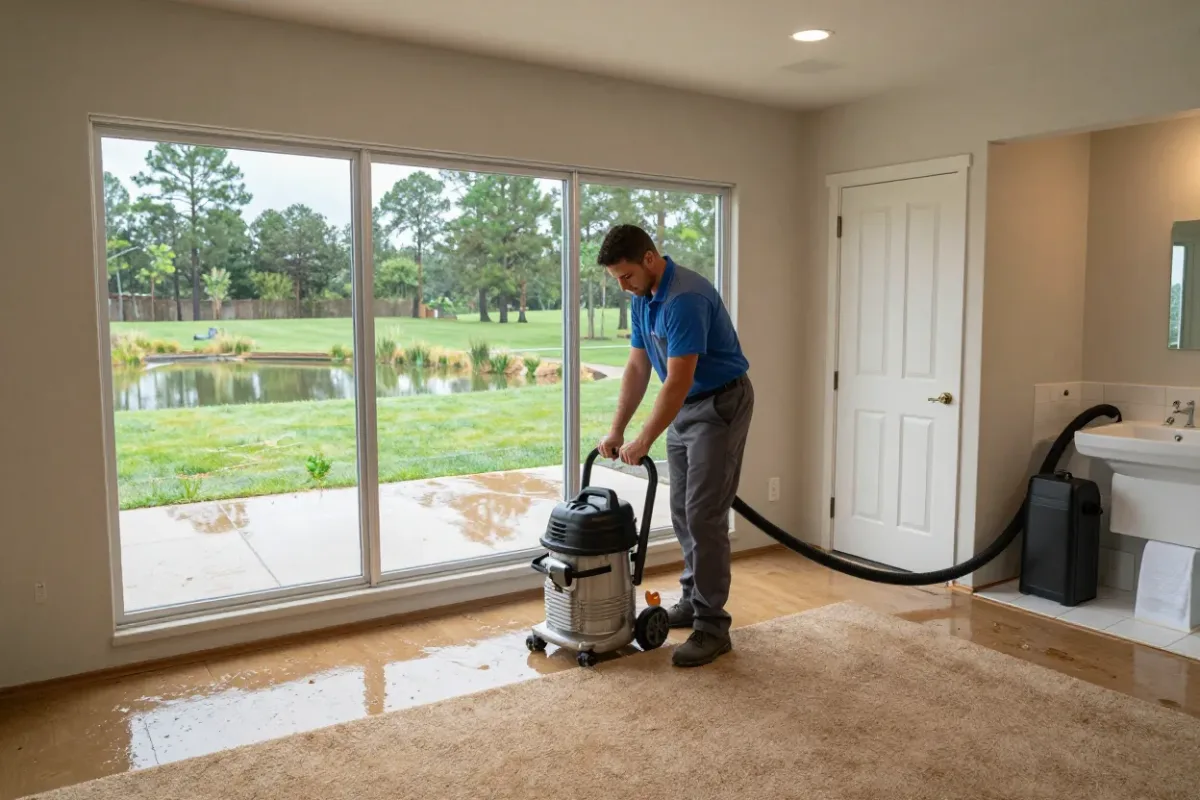
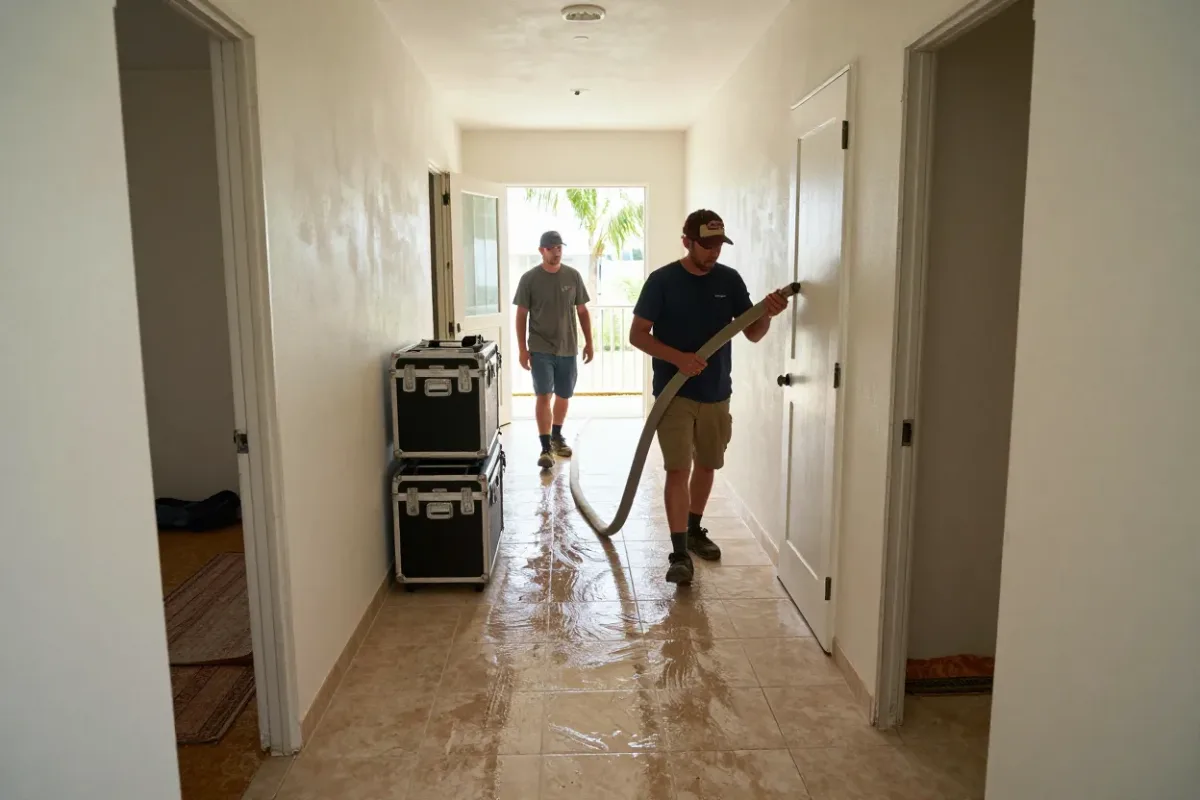
We arrive with portable and truck-mounted extractors, pumps for garages and low rooms, and air movers and dehumidifiers so drying starts on the first visit. Moisture readings and photographs begin immediately, giving your insurance claim a clear starting point. See our emergency water damage page for what the first hours look like.
Restoring Subdivision and Retirement Community Homes
In a Port Orange home, water damage restoration is mostly about the bottom two feet of the house. Drywall and baseboards wick water upward, carpet pad holds it, laminate planks swell, cabinet toe-kicks soak, and the insulation inside exterior walls stays wet long after the surface feels dry. We map every affected material with moisture meters and thermal imaging before removing anything, so the tear-out is no bigger than it has to be, then dry in place whatever the readings say can be dried.
Drying happens with the house closed and dehumidifiers sized to the space, because humid coastal air slows evaporation even a few miles inland. We check the numbers every day and pull equipment only when each material is at its target. In retirement communities and gated neighborhoods we coordinate with the HOA or management on access and hours so nothing stalls.
Rain, Creek and Tidal Flood Cleanup
Port Orange's flood exposure comes from three directions: the tidal Halifax River on its eastern edge, Spruce Creek and its floodplain to the south, and low interior drainage that fills during prolonged rain. The 2022 season showed what that means. Hurricane Ian produced extreme rainfall across the region, with over thirty inches measured at nearby Ponce Inlet, and weeks later Hurricane Nicole brought surge; thousands of Volusia County homes were damaged across the two storms. Hurricane Irma in 2017 also damaged thousands of homes countywide, and Hurricane Matthew in 2016 brought hurricane-force gusts to the Port Orange and New Smyrna Beach area with severe coastal erosion across the county. Hurricane Charley in 2004 is on the record as well.
Rain runoff, creek water and tidal water are all treated as contaminated. Flood cleanup here starts with pumping, then the soaked drywall, carpet and insulation are taken out instead of dried, the slab and hard surfaces are washed and disinfected, and air scrubbers run until the house is dry. Garages, lanai rooms and any part of the house a step lower than the rest get the closest look.
Repair Once Drying Is Confirmed
Repair begins when the moisture readings say the structure is dry. In Port Orange that usually means replacing the lower drywall and baseboards, reinstalling or replacing carpet, laminate and tile transitions, rehanging or replacing base cabinets, repainting, and restoring garage and utility closet finishes where a water heater or air handler failed. Doors and thresholds that let rain in are checked and corrected as part of the job.
We build the repair scope from the moisture logs and photographs gathered during mitigation, so your adjuster sees exactly what the water affected. For seasonal residents we can handle approvals remotely, send progress photos and close with a video walkthrough.
Mold Removal After a Leak or Flood
Mold in Port Orange usually follows a leak that was small or hidden: the wall behind a shower in a Willow Run ranch, a drain pan overflow in a Bentwood air handler closet, a garage wall that took rain water during Ian and was never opened up, or a slab leak under laminate that showed up only as a musty smell. Give wet drywall a few warm days and growth is likely.
Our mold remediation corrects the moisture source, contains the affected area with sheeting and negative air, removes and bags contaminated porous materials, HEPA-vacuums and cleans what remains, and dries the space completely before rebuilding. Fogging a room and leaving is not remediation, and we do not do it. Before repainting a wall that once got wet, it is worth reading about where hidden mold forms after water damage.
Common Reasons Port Orange Homes Get Wet
The losses we see reflect a flat, suburban city with tidal water on one side, a creek on another and a lot of plumbing in between. The most frequent causes include:
- Prolonged tropical rainfall overwhelming interior drainage and retention areas
- Spruce Creek rising across its floodplain into homes along the city's southern edge
- Halifax River tidal water backing into the low streets nearest the river
- Water heater failures in garages and utility closets
- Supply lines, toilet fittings and washing machine hoses that fail while the house is empty
- Slab and under-slab plumbing leaks in older subdivision homes
- Condensate backups from air handlers that run around the clock through the humid months
- Roof and flashing damage from hurricane winds letting rain into attics and ceilings
The Eight Steps We Follow
From a burst hose in Harbor Oaks to a rain-flooded garage in Crane Lakes, the order of work is the same. Drying and verification sit in the middle for a reason: they are what make the repair last.
- Inspection and moisture mappingWe find the source, classify the water, and trace how far it spread with meters and thermal imaging, checking closets, cabinets, the garage and the base of exterior walls.
- ExtractionTruck-mounted or portable extractors remove water from carpet, pad and hard floors; pumps clear garages and low rooms.
- Removal of ruined materialsSaturated drywall, wet insulation, carpet pad and swollen laminate or cabinet bases are cut out and bagged so the slab and framing can dry.
- Drying and dehumidificationThe house stays closed while air movers and dehumidifiers run, and we log moisture daily until every material reads dry.
- Cleaning and treatmentSurfaces touched by rain runoff, creek water or sewage are cleaned and treated, with air filtration running during the work.
- DocumentationWe assemble photos, daily readings and a written scope into a file you can hand to your carrier.
- RepairDrywall, baseboards, floors, cabinets and paint are put back so the repaired rooms match the untouched ones.
- Final moisture checkClosing readings and a walkthrough with you confirm the house is dry before we leave.
Port Orange Neighborhoods We Serve
We cover the whole city from the Halifax riverfront to the neighborhoods along Spruce Creek and the subdivisions west toward the interstate, including gated, golf-course and retirement communities.
Port Orange Neighborhoods
- Cypress Head
- Waters Edge
- Countryside
- Sunrise Oaks
- Bentwood
- Crane Lakes
- Foxboro
- Harbor Oaks
- Hidden Lake
- Willow Run
- Allandale
- Town Park
- Seminole Woods
- Sanctuary on Spruce Creek
Nearby Communities
Our crews also serve the cities along the Halifax and the rest of Volusia County. Several nearby cities have their own pages:
What to Do Until the Crew Arrives
These steps are safe for most homeowners and will save flooring, drywall and rebuild time.
- Turn off the waterClose the valve at the fixture or appliance, or the main shutoff at the house, if the source is plumbing.
- Stay out of water near electricityDo not walk into a flooded garage or room where outlets, cords, the water heater or the panel could be in contact with water. If the panel is dry and you can get to it on dry floor, you may cut power to the wet area; otherwise leave it.
- Treat rain runoff and creek water as contaminatedKeep children and pets away, avoid skin contact, and do not run household fans across it.
- Get belongings off the floorLift rugs, boxes and electronics; put foil or blocks under furniture that must stay.
- Photograph everything firstCapture the source, the water line and each affected room before anything is moved or thrown away.
- Keep the AC on and the house closedCooled, closed air slows mold growth; do not open the house to humid outside air.
- Call usReach (888) 435-4769 and tell us the source, how long it has been wet, and whether the garage or a lanai room is involved.
After a named storm, read the first 24 hours after a flood guide and the hurricane water damage recovery guide for what to do next.
Port Orange Water Damage FAQs
Our house took rain water during Ian but never flooded before. Is that likely to happen again?
We cannot predict the weather, but we can make sure the last event was dried properly and note any drainage or threshold issue we find so you can address it. If the lower walls were never opened after Ian, a moisture reading along the base takes minutes and tells you whether anything is still wet.
Can you tell whether I have a slab leak?
Warm or damp floor tile, a spinning water meter with everything off, and moisture readings that are highest in the middle of a room rather than at a wall all point to it. We confirm with moisture mapping and thermal imaging and then dry and repair the affected area once the plumber has fixed the line.
We live in a gated or retirement community. Do you handle HOA and management requirements?
Yes. We coordinate with the HOA or management on gate access, hours and any documentation the community requires so the job keeps moving.
Is carpet salvageable after a water heater flood?
Often the carpet is, if the water was clean and we reach it within about a day. The pad underneath usually is not and is replaced. Carpet touched by rain runoff or sewage is removed.
How long will the drying equipment run?
Most clean-water losses in a typical Port Orange slab home dry in a few days. Flooded garages and rooms that took rain runoff take longer because removal comes first. You get an estimate after the inspection and updates as the readings come in.
Do you serve South Daytona, Ponce Inlet and New Smyrna Beach too?
We do, along with Daytona Beach, Ormond Beach and the rest of Volusia County, and the rest of Florida through our statewide service areas.