The Villages is not a city in the usual sense. It is a master-planned retirement community that spreads across Sumter County and into neighboring Marion and Lake counties, organized around golf-cart-accessible town centers such as Spanish Springs, Lake Sumter Landing and Brownwood Paddock Square rather than a downtown. Its housing is overwhelmingly newer single-family homes in age-restricted villages, and its ground is karst limestone on gently rolling inland terrain around Lake Sumter and Lake Deaton, well away from any coast. Water damage here almost never comes from surge; it comes from plumbing, roofs, summer downpours and, in wet years, from the ground itself.
Water Damage Florida provides water damage restoration in The Villages 24 hours a day, covering every village and district from the older sections near Lady Lake to the newest neighborhoods in Eastport, Sawgrass Grove and Bison Valley. When you find water in the house, call (888) 435-4769 and we will guide you through the first steps while a crew heads your way.
Emergency Water Damage Response in The Villages
Most of the emergency calls from The Villages involve a home that was fine yesterday. A water heater in the garage or laundry room gives way overnight. A refrigerator line behind the wall drips for days before it shows at the baseboard. A homeowner returns from a month up north to find the air handler drain pan overflowed into the hallway. In summer, a hard afternoon thunderstorm drives rain past a lanai screen and under the sliding door, or a roof vent boot fails and soaks a bedroom ceiling.
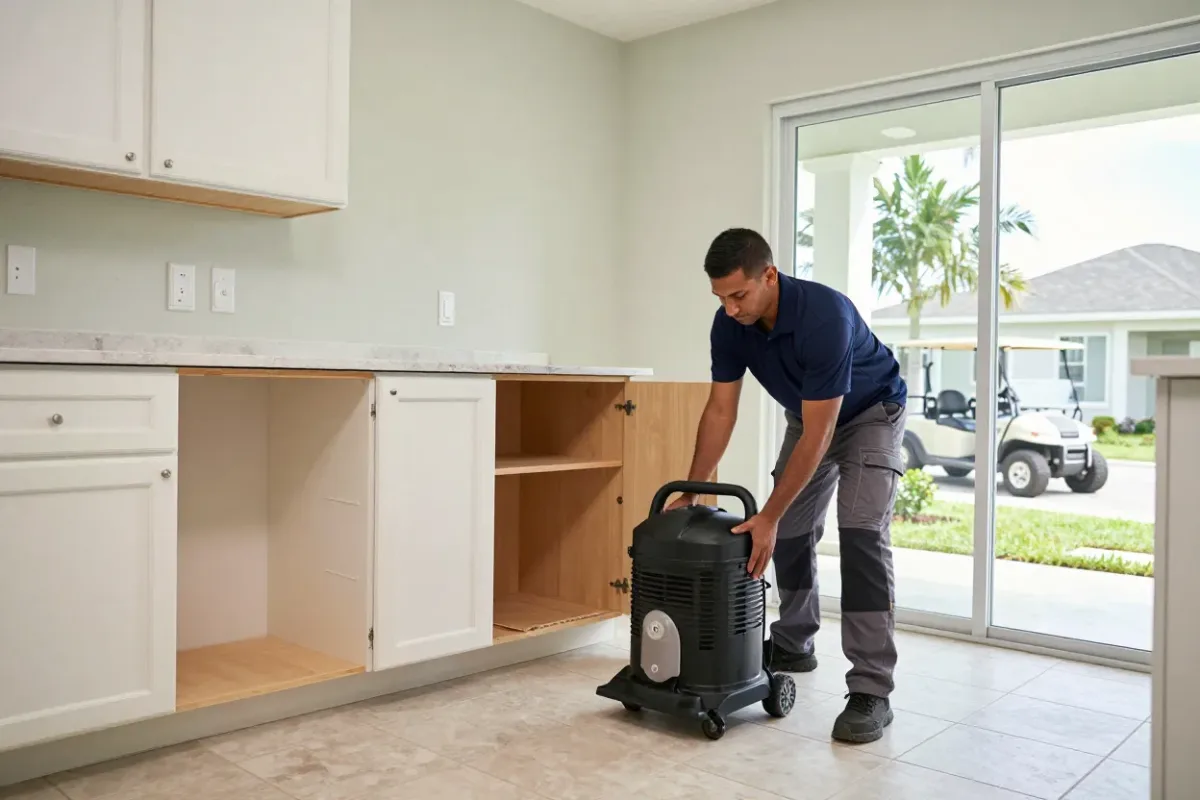
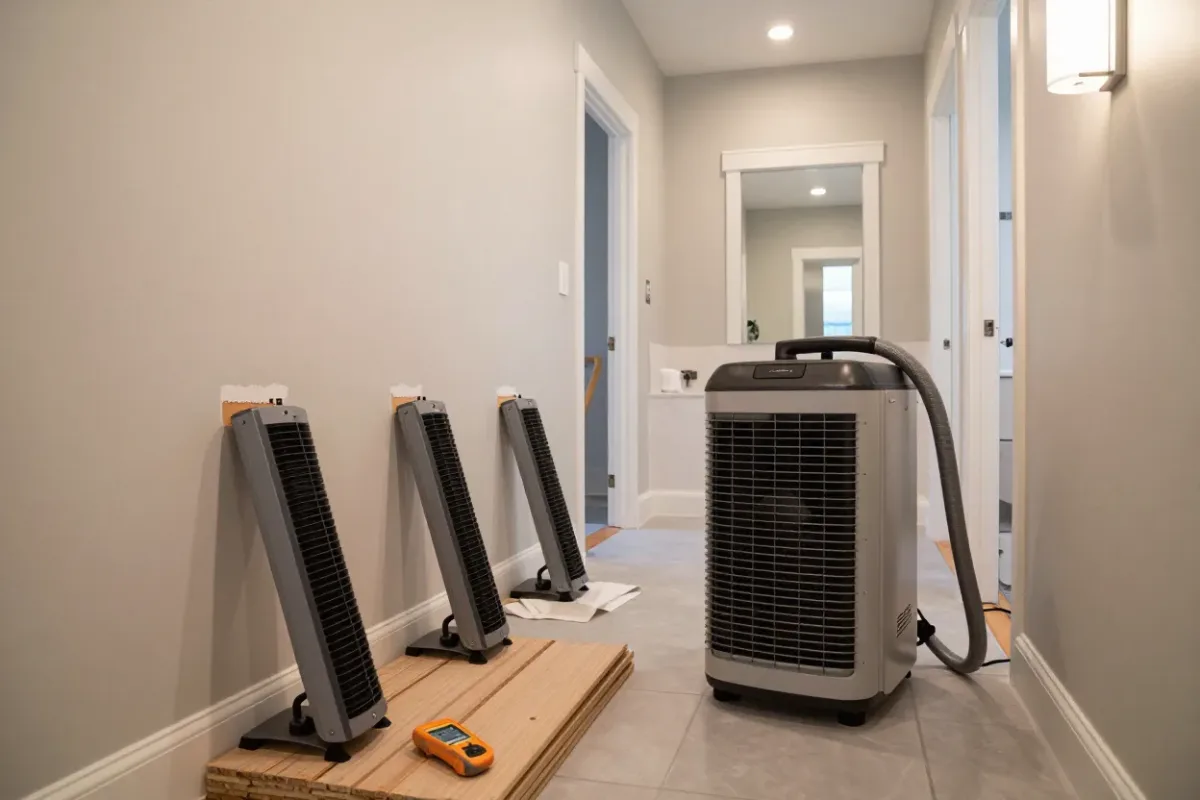
Our crews respond with extractors, air movers and dehumidifiers sized for single-story homes and start drying on the first visit. Because so many homes here are alike in layout, we know where water tends to travel: along the tile toward the bedrooms, under the vinyl plank in the living area, and into the closet that backs the water heater. We meter and photograph before setting equipment so your insurance file starts with an accurate picture. Our emergency water damage page has more on what the first visit looks like.
Restoration for Newer Single-Story Homes and Older Sections
The typical home in The Villages is a block or frame single-story on slab, with tile, plank or carpet floors, drywall walls, an attached garage and a lanai. That construction dries well when opened up promptly: we lift wet flooring, remove the lower drywall and baseboard where readings call for it, pull cabinet toe-kicks so air reaches the slab beneath, and dry the cavity with dehumidification rather than hoping the surface dries on its own. The older sections near Lady Lake include a smaller stock of manufactured homes, which need the floor cavity and belly wrap opened and dried from below.
Drying is monitored, not guessed. We take moisture readings every day, adjust the equipment, and continue until each material reads within its dry standard. Cleaning and antimicrobial treatment follow if the water was contaminated, and only then does repair begin. For a description of the equipment and the standards we work to, see our water damage restoration service page.
Rain-Driven Flooding and Saturated Ground
With no coast and no surge, flooding in The Villages is about rain. Summer downpours and tropical systems bring inland, rain-driven flooding: water sheeting across a yard and under a garage door, ponding on a lanai that drains inward, or backing up from a street drain into a low driveway. The ground adds a twist. The community sits on karst limestone, and in 2018 a cluster of sinkholes opened in yards and a roadway inside the community after more than a week of heavy rain, forcing several homes to be evacuated; geologists attributed the collapses to saturated ground over underground voids. Long wet spells here deserve respect.
Runoff and street water are treated as contaminated. Our flood cleanup removes the carpet, pad, lower drywall, insulation and cabinet bases the water reached, cleans and disinfects the slab and hard surfaces, runs air filtration during the work, and then dries the home. If you notice new cracks, sagging ground or a depression in the yard alongside the water, keep away from that area and tell us when you call. Our flood restoration page and the first 24 hours after a flood guide cover the rest.
Water Damage Repair in The Villages
Repair in The Villages usually means restoring newer finishes to match: replacing sections of vinyl plank or tile, hanging and finishing drywall, reinstalling baseboards and repainting, rebuilding kitchen and bath cabinet bases, and replacing lanai ceiling panels or bedroom ceiling drywall after a roof leak. Because many homes share the same builder finishes, matching is often straightforward, but we confirm materials with you before ordering.
The repair scope is drawn from the moisture map and photographs taken during mitigation, so there is a clear line between what the water damaged and what it did not. That record goes to you and your adjuster. If you spend part of the year elsewhere, we can coordinate access and keep the project moving by phone and email while you are away.
Mold Removal After Leaks in The Villages
Homes that sit closed for the summer with the thermostat turned up are where mold gets ahead of the owner. In The Villages we most often find growth behind the drywall of a water heater closet, under plank flooring that was wiped up but never dried underneath, on the back of kitchen base cabinets after a dishwasher or refrigerator leak, and in the drywall of a lanai-side wall where rain got past the slider track.
Mold cleanup begins with the moisture source, then containment with sheeting and negative air, removal and bagging of growing porous materials, HEPA vacuuming and cleaning of remaining surfaces, and drying of the cavity before it is closed. Surface sprays over growth are not a fix. Our mold remediation page explains each step, and our note on hidden mold after water damage is worth reading if a leak was cleaned up while you were away.
Where Water Damage Comes From Here
The calls we take across The Villages reflect newer single-story construction, homes that sit empty for stretches, and an inland climate with hard summer rain. The most frequent sources:
- Water heaters in garages and laundry rooms failing, often while the owner is away
- Refrigerator ice-maker lines and dishwasher connections leaking slowly behind cabinets
- Air handler condensate lines clogging and drain pans overflowing in summer
- Rain driven past lanai screens and under sliding door tracks in afternoon storms
- Roof vent boots, flashing and shingle damage letting water into bedroom ceilings
- Runoff sheeting under garage doors from yards and streets during downpours
- Toilet supply lines and braided connectors failing under constant pressure
- Ground saturation and sinkhole activity after prolonged heavy rain over karst limestone
The Eight Steps of a Restoration Job
Whether the water came from a heater or a thunderstorm, the work runs in the same order. Here is how a job in The Villages proceeds from the first visit to the final reading.
- Inspection and water classificationWe confirm the source is off, decide whether the water is clean or contaminated, and meter floors, walls and cabinets to find the full wet footprint.
- Water extractionPortable and truck-mounted extractors remove standing water from tile, plank and carpet, and pumps clear a garage or lanai if needed.
- Removal of unsalvageable materialsWet pad, swollen baseboard, lower drywall, insulation and cabinet bases that cannot be dried are cut out and bagged.
- Structural dryingAir movers and dehumidifiers run in the closed home with the air conditioning on, and readings are logged daily until each material reaches its dry target.
- Cleaning and treatmentSlab and framing that contacted runoff or contaminated water are cleaned and treated, and air scrubbers run during the work.
- Documentation for insurancePhotographs, daily moisture logs and a written scope are compiled for you and your adjuster.
- Repair and finish workDrywall, flooring, cabinet bases, trim, paint and ceilings are restored to match the home.
- Final moisture checkA last set of readings and a walkthrough with you confirm the home is dry and the work is complete.
Villages and Districts We Serve
Our crews cover the whole community across all three counties, from the original sections near Lady Lake to the newest villages south of Brownwood, and the town centers and districts in between.
Areas of The Villages
- Spanish Springs
- Lake Sumter Landing
- Brownwood Paddock Square
- Eastport
- Sawgrass Grove
- Bison Valley
- Oak Meadows
- Spring Arbor
Nearby Communities
The towns that surround The Villages share the same inland weather and the same limestone ground, and our crews serve them too. Several have their own local pages:
What to Do in the First Hour
These steps are safe for most homeowners and make a real difference in how much of the home can be saved.
- Turn the water offClose the fixture valve or the main shutoff, typically near the front of the house by the hose bib or at the meter box. If the water heater is leaking, close its inlet valve.
- Keep away from water near outlets or the panelDo not step into a wet garage or room where cords, appliances or outlets are in the water. Shut off breakers only if the panel is dry and reachable from dry ground.
- Do not handle runoff or street waterWater that came in from outside is contaminated. Keep people and pets clear of it and leave the cleanup to the crew.
- Move what you can to a dry roomRugs, electronics, boxes and light furniture come first. Set foil or plastic under heavy furniture legs that stay.
- Photograph everythingCapture the source, the extent of the water and each room affected before anything is moved or removed.
- Leave the air conditioning runningCool, dry air slows microbial growth. Keep the windows and lanai doors shut.
- Call for helpReach Water Damage Florida at (888) 435-4769 and tell us the source, how long it has been wet and whether you are at the home or away.
Questions From Homeowners in The Villages
We are away for the summer and a neighbor found water in the house. What should we do from out of state?
Ask the neighbor to shut off the main valve if it can be reached safely, then call us. With your authorization and a way in, we assess, extract, dry and document the home and keep you updated by phone and email with photos and moisture logs until you are back.
Do you work with the village associations or the district?
Our work is inside your home and on your property, and we coordinate with you as the owner. If access rules or gate procedures apply in your village, tell us when you call and we will follow them.
Our yard has a low spot that stays wet after heavy rain. Should we be worried about a sinkhole?
Ground that stays saturated over karst limestone is worth attention, and the 2018 sinkholes in the community followed more than a week of heavy rain. We are not geologists, and evaluating ground stability is outside our scope. If you see a new depression, cracks or sagging, keep clear and contact your insurer and a qualified engineer; we will handle the water inside the home.
Can vinyl plank floors be saved after a water heater leak?
Sometimes, if the leak is caught early and the slab beneath has not been wet for long. We lift the planks, dry the slab and reinstall when readings allow. When the water sat for days, the slab is usually too wet and the flooring is replaced after drying.
Rain came under the lanai slider and wet the living room carpet. Is that a small job?
Often smaller than it looks if we get there quickly. Carpet and pad near a slider can usually be extracted and dried in place when the water is clean rain and it has not soaked the wall. If the drywall behind the baseboard is wet, that section comes out so the cavity can dry.
How long will the equipment stay in the house?
A small clean-water loss caught early typically dries in a few days. Larger areas, wet slabs or contaminated water take longer. We monitor daily and remove the equipment when the readings show the materials are dry, not on a fixed schedule.